Best shoes for foot health: how to choose comfortable, supportive pairs
The best shoes for foot health fit properly with room for your toes, support your arch, cushion the heel, and use breathable materials. Match the shoe to the activity, replace worn pairs, and choose comfort over a tight, purely fashionable fit.
The right shoes do quiet, daily good for your feet, and the wrong ones cause a surprising amount of trouble. Choosing well is not complicated once you know what matters: a proper fit, real support, sensible cushioning, and materials that breathe. Here is a practical guide to the best shoes for foot health, plus how to match them to your day and know when a favourite pair has had its time.
What healthy shoes have in common
Good shoes share a few features whatever their style. They fit your foot properly, they support your arch, they cushion your heel, they hold your foot securely without pinching, and they let air move so feet stay dry. A shoe that ticks those boxes tends to keep feet comfortable and problem-free.
Just as telling is the comfort test. A genuinely good shoe feels right the moment you put it on. The old idea that shoes need painful breaking in usually just means they do not fit, so trust your feet over the label.
Getting the fit right
Fit is the most important thing of all, and it is easy to get wrong. Aim for roughly a thumb’s width between your longest toe and the end of the shoe, enough room to wiggle all your toes, and a secure hold around the heel and midfoot so your foot does not slide.
A few habits help you land the right size. Shop later in the day, when feet are naturally a little larger, and always fit to your bigger foot, since most people have one. Feet also change over the years, so measure now and then rather than assuming your size is fixed. A shoe that pinches, rubs, or slips is a source of the blisters and calluses covered in our common foot problems guide.
Support and cushioning
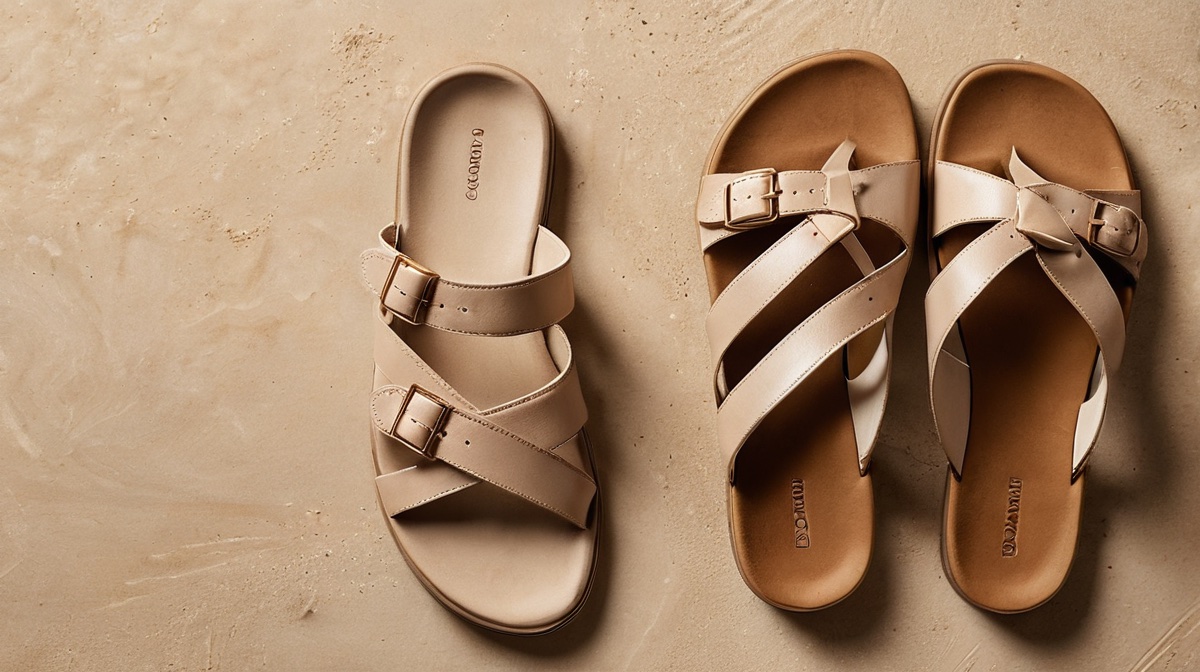
Support keeps your foot working the way it should. Look for a shoe that supports your arch and does not twist too easily through the middle, with a firm heel area that cradles you. Good support reduces strain on your feet, ankles, and beyond over a long day.
Cushioning absorbs the shock of each step, which your heels and the balls of your feet appreciate, especially on hard pavements. You want enough to feel comfortable without so much softness that the shoe loses all stability. If a shoe lacks support, quality insoles can sometimes help, though they work best as an addition to a decent shoe rather than a rescue for a bad one.
Materials and breathability
What a shoe is made of affects how healthy it is to wear. Breathable materials such as leather or modern mesh let moisture escape, keeping feet drier and less prone to the fungal issues that thrive in damp. Soft, flexible uppers reduce rubbing, while a sole with a little grip keeps you steady.
Pair breathable shoes with clean, breathable socks and you have covered most of what keeps skin comfortable. Our guide to keeping feet soft and smooth explains why reducing friction and damp matters so much for your skin.
Common footwear mistakes to sidestep
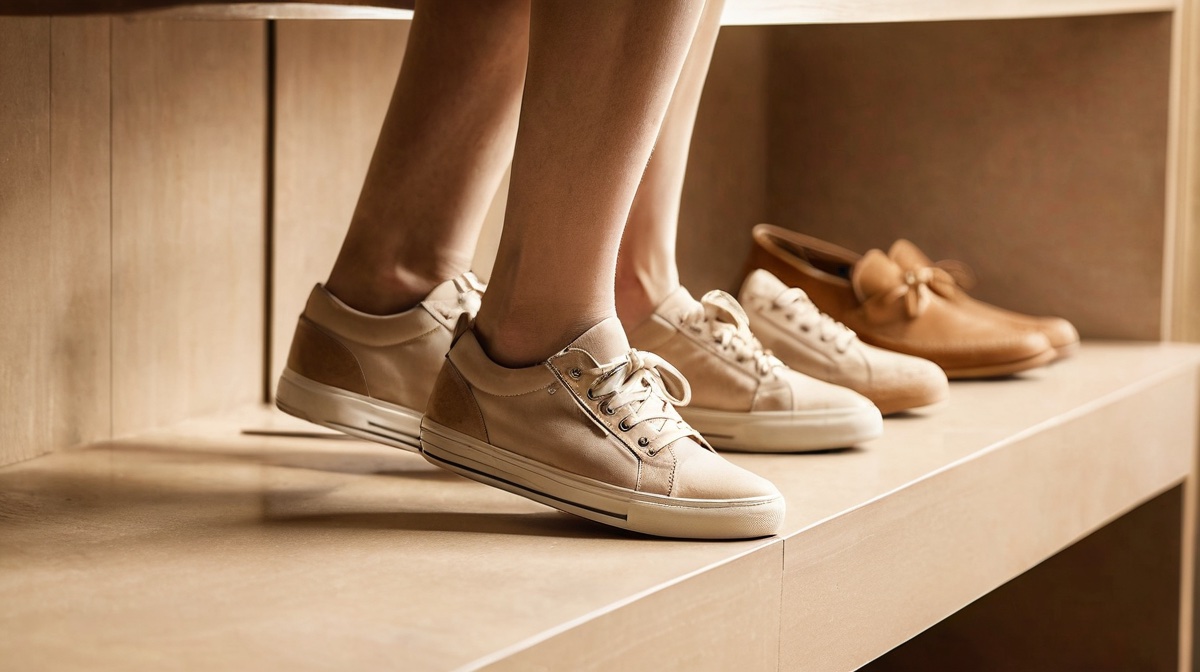
A few habits quietly undo good footwear choices, and they are easy to fix once you spot them. Buying shoes that are slightly too small, in the hope they will stretch, is a common one, and it leads to cramped toes and sore spots. Trust the comfortable size over the smaller number on the box.
Wearing the same pair every single day is another. Shoes need time to dry out and recover their shape, so rotating between two or three pairs is kinder to both the shoes and your feet. Living in unsupportive flats or high heels all day, day after day, also asks a lot of your feet, and a bit of variety spreads the load.
Finally, hanging on to worn-out favourites long past their best is understandable but costly. Once the support has gone soft and the cushioning feels flat, a shoe stops protecting you, however comfortable it once felt. None of this means chasing expensive brands. A well-fitting, supportive, breathable shoe in your correct size, replaced when it is tired, does far more good than any logo, and your feet will feel the difference by the end of a long day.
Match shoes to your day, and replace them in time
No single pair does everything. Supportive trainers suit walking and exercise, a comfortable structured shoe suits long days on your feet, and lighter styles are fine for gentler occasions. Rotating between pairs lets each dry out fully and spreads the wear, which is better for your feet and your shoes.
Worn-out shoes quietly stop protecting you. When the cushioning feels flat, the tread is smooth, or the support has gone soft, it is time to replace them, however loved they are. Feet do best with variety and freshness, so retire tired pairs kindly. If you love open styles for summer, our guide to sandals and open shoes has you covered, and the care board in the Club is a friendly place to swap recommendations.
Questions people ask
What makes a shoe good for foot health?
A good shoe fits properly with room for your toes, supports the arch, cushions the heel, holds your foot securely, and breathes. It should feel comfortable straight away rather than needing to be broken in.
Are flat shoes or heels better for your feet?
Very flat, unsupportive shoes and high heels can both cause trouble if worn all day. A modest heel, good support, and a secure fit tend to be kindest. Variety helps, so rotate styles rather than living in one extreme.
How do I know if my shoes are the right size?
There should be about a thumb's width between your longest toe and the end, room to wiggle your toes, and no pinching or slipping. Shop later in the day when feet are slightly larger, and fit to your bigger foot.
Take it past the page
Guides give you the method. People give you the reassurance and the small tips: what worked for them, and how they got comfortable with it. The Club is full of them.
Find your people →